
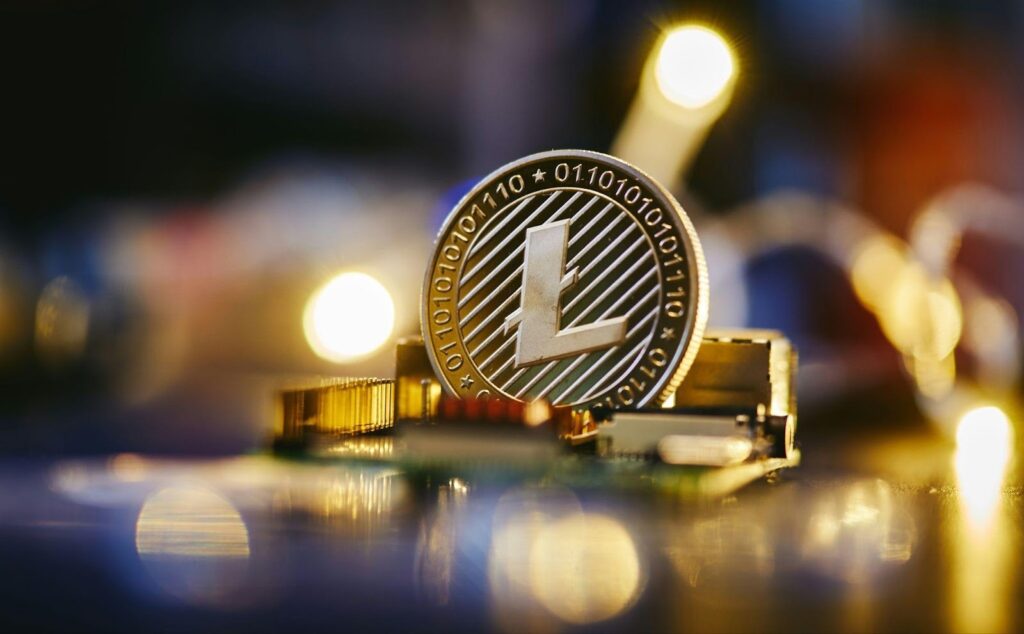
While Bitcoin remains frozen in anticipation of new price records, Litecoin has quietly captured the niche of fast transactions in the digital entertainment industry. In this article, we will examine why “digital silver” has become the favorite in crypto casinos, how the technological superiority of LTC influences the user experience, and what regulatory shifts in Europe are opening new horizons for this asset.
The Technological Edge of Litecoin in Betting
In an industry where the outcome of an event is decided in fractions of a second, a delay in transaction confirmation can cost a player favorable odds or participation in a tournament. The Litecoin blockchain generates blocks every 2.5 minutes, which is four times faster than Bitcoin, and this advantage becomes a decisive factor for modern platforms. As technical experts note on the esports gg website, this speed, combined with negligible fees, makes LTC an ideal bridge between fiat money and gaming balance, especially for users who value prompt payouts.
The technological architecture of Litecoin allows the network to maintain high throughput even during peak load moments, which is critical for large iGaming operators. While Ethereum struggles with “gas wars” and Bitcoin with mempool congestion, LTC remains a stable and predictable working tool. It is this technical reliability that attracts not only players but also software developers who seek to minimize friction in the interface during account top-ups.
Economic Impact of the Digital Entertainment Shift
The development of cryptocurrency payments in gambling is not an isolated process but part of a global transformation in consumer behavior. We are seeing a growing impact of digital entertainment on the global economy, forcing traditional financial institutions to reconsider their views on cross-border transfers. The speed of capital circulation within crypto casinos stimulates the growth of related IT sectors, from cybersecurity to the development of decentralized applications.
The scalability of such solutions allows local markets to integrate into the global network without the need for complex banking compliance. This creates a unique situation where technological progress in one narrow niche, for example, in Litecoin transactions for gaming, becomes a driver for the development of the entire digital infrastructure of the region.
Regulatory Horizons: From Grey to Green
European regulators are beginning to realize that bans do not work, and it is better to create transparent rules of the game. For example, Malta intends to legalize the use of cryptocurrencies at online casinos, which will become a powerful signal for the entire global market. This decision will allow operators to emerge from the “grey” zone, providing players with an additional level of legal protection.
Below is a comparison of the key parameters of Litecoin with the main competitors in the context of use in online casinos:
| Network parameter | Litecoin (LTC) | Bitcoin (BTC) | Ethereum (ETH) |
| Average block time | 2.5 minutes | 10 minutes | 12 seconds |
| Transaction fee | Less than $0.01 | From $2 to $50 | Depends on network load |
| Payment confirmation | Almost instant | Up to 60 minutes | From 1 to 5 minutes |
| Integration complexity | Low | Medium | High (smart contracts) |
| Level of anonymity | High | Medium | Medium |
| Availability on exchanges | Everywhere | Everywhere | Everywhere |
This table clearly shows why LTC holds the title of the most practical asset for daily use in the gaming industry. The balance between speed, price, and accessibility makes it virtually the only choice for the mass user.
Moving Toward a Frictionless Gaming Future
Summing up our review, it can be stated that Litecoin has successfully outgrown its status as a simple Bitcoin fork, finding its true calling in the world of high-speed transactions. It is precisely the technical stability and low costs that make it a favorite among both operators and ordinary players. The regulatory changes in Malta and the overall trend toward the digitization of the economy only confirm that the integration of cryptocurrencies into gambling is not a temporary fad, but a fundamental shift.