Earlier, trading appeared as an activity for office rooms full of screens and traders making phone calls and yelling in excitement over prices. However, now trading looks entirely different. A beginner trader can open his laptop, track real-time charts, browse news related to the market he works on, backtest some strategies, and even place trades from home without leaving his room. This technological development simplified trading, but also emphasized discipline in it.
It should be mentioned that using various online trading platforms has become the main task for many beginners trying to understand forex, CFD, indicators, automated trading systems, charts, etc. It is why such notions as Trading with MetaTrader 4 appear frequently in relation to these themes. Naturally, a platform itself cannot make one successful in trading. It only provides him with necessary tools and resources to analyze market performance and conduct trades effectively.
Why The Platform Matters
A trading platform is not just a place where traders execute their orders by pressing certain buttons. This is a workspace where decisions are made. If the platform is cumbersome, sluggish, and unattractive, then it distracts the trader from making decisions. If it is clear and familiar, then the trader focuses on the market itself, rather than on mastering how to use the trading software.
This is an important point because trading nowadays is already filled with information. The market moves quickly. Sentiment can change due to news in seconds. Currencies, commodities, stocks, and cryptocurrencies respond differently to various events. A clear interface can allow beginners to focus on basic things before making decisions.
A good platform usually helps with:
- reading charts clearly
- placing orders without confusion
- using indicators in a controlled way
- checking trade history
- managing risk levels
- testing strategies before using real money
That last point is especially important. Beginners often think the main skill is predicting the next move. In reality, a large part of trading is learning how to survive wrong ideas. Every trader gets trades wrong. The question is whether one bad trade damages the whole account.
Charts Teach Patience
Chances are, a beginner trader will find charts daunting. Candlesticks, timeframes, moving averages, trend lines, volume, and price level are all things to keep track of in charts. However, once one gets used to chart analysis, it is easier. They start showing behavior.
A chart does not tell the future. It shows how people have acted in the past and how price is reacting now. That is useful because markets are driven by decisions, fear, confidence, liquidity, and expectations. When many traders watch the same support or resistance area, prices can react there simply because people are paying attention.
This is where a trading platform becomes a learning tool. A beginner can switch between timeframes and see how the same market looks different on a five-minute chart and a daily chart. Short timeframes may feel exciting, while longer timeframes can show the bigger direction more calmly.
I think this is one of the most useful habits for new traders: zoom out before zooming in. A trade that looks perfect on a tiny timeframe may look messy when viewed from a wider angle.
Risk Tools Are More Important Than Indicators
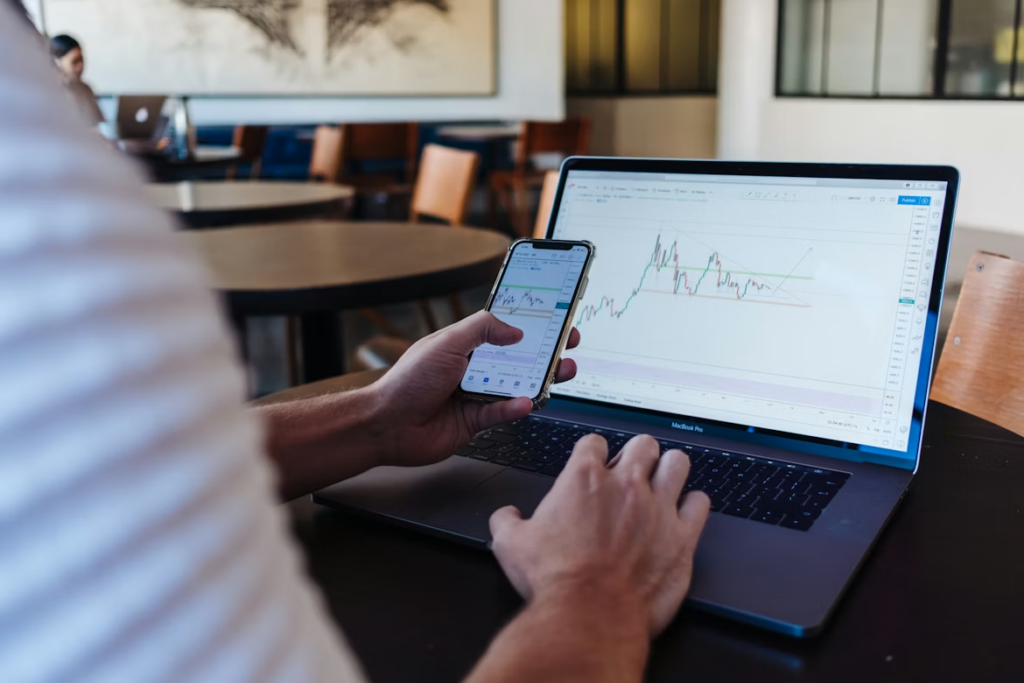
Many beginners fall in love with indicators. They put together their moving averages, RSI, MACD, Bollinger Bands, as well as several custom indicators until it looks like a dashboard. Indicators could be beneficial, however, there are just too many indicators that could produce noise.
While risk management seems boring, it is more important. A simple stop loss, position size calculation, and clear exit plan can protect a trader from emotional decisions. The U.S. The Securities and Exchange Commission has a useful warning page about day trading risks, especially around leverage and fast losses.
Leverage deserves special attention. It can make a small market move feel much larger in your account. That sounds attractive when the trade goes well. It becomes painful when the market moves the other way. That is why newcomers need to take leverage into consideration as a tool that should not be used recklessly.
A simple trading checklist can help:
- What is the reason for entering this trade?
- Where is the invalidation level?
- How much of the account is at risk?
- What is the target?
- Was the trade thought through or driven by emotions?
- Would this trade make sense after taking a ten-minute break?
The pause matters. Many bad trades happen because the trader feels pressure to act immediately.
Automation Should Support Thinking
One reason platforms like MetaTrader became popular is the ability to use automated tools and expert advisors. Automation can be helpful because it removes some emotional pressure. A system can follow rules without fear, boredom, or revenge trading.
However, automated trading systems have limits as well. A system that was able to bring profit under some circumstances could be ineffective under other circumstances. While a robot is capable of performing according to a set of rules, it cannot take into account every political move, surprise from the central bank, liquidity problem, and news cycle. That is why testing is necessary.
The backtest can reveal how the system behaved in certain circumstances. The demo trading can reveal how the system works in a real-time environment without any risks associated with it.
The growth of retail trading has also created a wider conversation about access to markets and the information gap between professionals and everyday traders. Forbes has covered this broader issue in its discussion of retail trading and market access. The takeaway is simple: tools are easier to access now, while good judgment still takes time to build.
Building A Calmer Routine
The best use of trading technology is not constant action. It is routine. A trader can use a platform to prepare, observe, test, record, and review. Although it is slower compared to reacting to every market change, it helps develop good habits.
Such a cool approach to trading may involve monitoring the most important events, noting the critical levels, working with just a few assets, and determining ahead of time under which circumstances one will trade. Then, trading platform turns into an office of execution.
Journaling is also underrated. Most platforms provide account history, but a personal trading journal adds context. Why did you enter? How did you feel? Did you follow the plan? Was the trade actually good, even if it lost money? These notes can reveal patterns that numbers alone miss.
In the end, smart trading tools changed the way beginners approach markets because they made professional-style features available from an ordinary laptop. One can use charts, alert systems, different indicators, orders, automations, tests, and other useful features. The hardest thing is using them without being impulsive.
Technology can make trading more organized. It can make learning easier. It can help a beginner see the market with more structure. The trader still has to bring discipline, curiosity, and respect for risk. That combination is where the real progress begins.